
Can Nattokinase Help With Blood Clots? Science Explained
Yes, Nattokinase is a potent proteolytic enzyme that has been scientifically shown to support the breakdown of blood clots by directly dissolving fibrin, the protein "mesh" that forms the structure of a clot. Unlike many traditional supports that only prevent new clots from forming, Nattokinase enhances the body's natural fibrinolytic activity, helping to clear existing fibrin buildup and improve overall blood flow and viscosity in adults aged 30+.
The Mechanism of Fibrinolysis
How Nattokinase Dissolves the “Mesh”
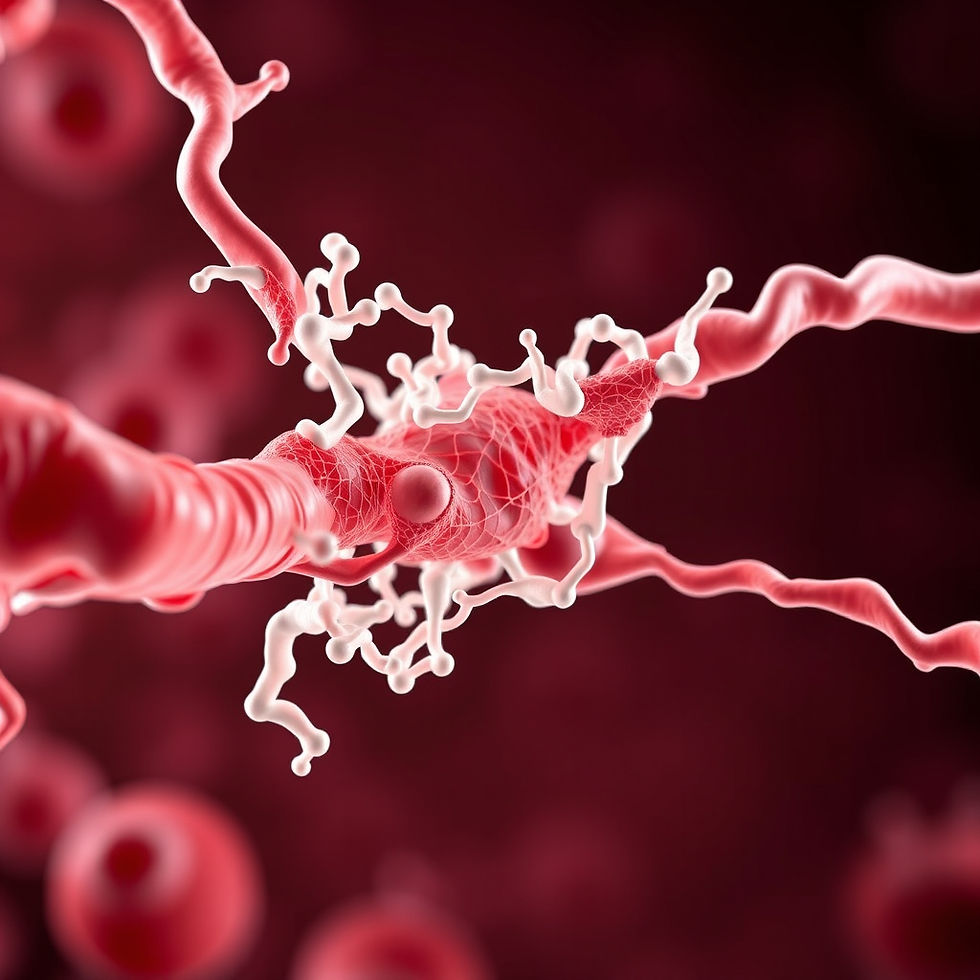
Blood clots form when the body converts fibrinogen into fibrin, creating a dense protein mesh that traps platelets and seals an injured vessel. In aging and chronic inflammation, this system can become overactive, leading to “thicker” blood and increased risk of micro‑clots and elevated plasma viscosity.
Nattokinase acts via three complementary mechanisms:
Direct Fibrin Breakdown
Nattokinase directly cleaves cross‑linked fibrin, essentially “digesting” the structural mesh of existing clots both in vitro and in animal and human models. This direct proteolytic action is why Nattokinase is classified as a fibrinolytic enzyme, similar in function (but not source) to plasmin, the body’s own clot‑dissolving enzyme.
Boosting Plasmin Activity
Nattokinase upregulates the conversion of plasminogen into plasmin, the endogenous enzyme that degrades fibrin. Studies show it increases tissue‑type plasminogen activator (t‑PA) and can activate prourokinase to urokinase, further enhancing fibrinolysis. After a single oral dose, markers of fibrin degradation (fibrin/fibrinogen degradation products and D‑dimer‑like fragments) rise, confirming increased thrombolytic activity.
Suppressing PAI‑1 and Platelet Aggregation
Nattokinase reduces plasminogen activator inhibitor‑1 (PAI‑1), a protein that inhibits fibrinolysis and promotes clot persistence. It also modestly inhibits platelet aggregation by interfering with thromboxane formation, which helps prevent new clots without substantially increasing bleeding risk in healthy adults.
Why Biohackers Care About Viscosity and Flow
For the 30+ biohacker, Nattokinase is less about dramatic “clot‑busting” and more about higher‑grade vascular and hemorheological optimization. Hemorheology—the study of blood flow—shows that even small changes in viscosity and micro‑clot load can significantly alter oxygen delivery and vascular resilience.
Improved Oxygen Delivery
By reducing fibrinogen and fibrin‑rich micro‑clots, Nattokinase can lower plasma viscosity and improve micro‑circulatory flow. In clinical and animal trials, regular Nattokinase intake is associated with shorter euglobulin clot lysis time (ECLT) and prolonged partial thromboplastin time, indicating a more dynamic, “self‑clearing” clot‑dissolution system. Thinner, cleaner blood moves more easily through capillaries, potentially enhancing oxygen delivery to muscles and the brain.
Vascular Elasticity and “Clean” Vessels
Chronic fibrin deposition and micro‑thrombi can contribute to endothelial stiffness and progression of atherosclerosis. Meta‑analyses of randomized trials suggest Nattokinase may modestly reduce blood pressure, fibrinogen, and factors II, VII, and VIII, all of which support a more youthful vascular environment. By preven
ting the buildup of protein “plaque” and micro‑clots on vessel walls, Nattokinase helps maintain the elasticity and responsiveness of arteries and arterioles.
Nattokinase vs. Traditional Anti-Platelet Support
Feature | Nattokinase (Nutramito) | Traditional Anti‑Platelets (e.g., Aspirin) |
Primary Action | Dissolves existing fibrin mesh (fibrinolytic). | Preven ts platelets from sticking (anti‑platelet). |
Mechanism | Proteolytic digestion of fibrin + enhancement of plasmin. | Inhibition of COX‑1 and thromboxane‑dependent aggregation. |
Recovery Benefit | Helps clear old fibrin‑rich protein debris in circulation. | Limited impact on pre‑existing clots; mainly prophylactic. |
Source | Natural fermented soy (natto). | Synthetic / chemical (e.g., acetylsalicylic acid). |
The “Vascular Hygiene” Protocol
1. The Consistency Factor Fibrinolysis is a continuous process, not an on‑demand event. Clinical and mechanistic studies commonly use 2,000 FU (fibrinolytic units) per day, showing measurable increases in fibrin degradation products and improvements in clotting parameters after several weeks of daily intake. For long‑term vascular support, a steady, low‑dose protocol (e.g., 2,000 FU once daily) is more aligned with “maintenance” than acute intervention.
2. Synergy with NMN and Mitochondrial Health While NMN supports cellular energy and mitochondrial function, Nattokinase ensures the vascular “pipes” remain clear enough to deliver that energy efficiently. Preclinical data suggest that improved hemodynamics and reduced fibrin load can enhance oxygen delivery to energy‑hungry tissues such as brain and muscle, creating a dual‑lever strategy for cellular + circulatory optimization.
References (Short‑Form Citations)
Sumi et al., Scientific Reports, 2015 – “A single‑dose of oral nattokinase potentiates thrombolysis and anti‑inflammatory action.”
Sumi et al., Japanese Journal of Thrombosis and Hemostasis, 2003 – “The antithrombotic and fibrinolytic effect of natto in humans.”
Chen et al., Current Pharmaceutical Design, 2018 – “Nattokinase: A promising alternative in prevention and treatment of thrombotic disease.”
Wang et al., Journal of Clinical Biochemistry and Nutrition, 2015 – “Nattokinase atherothrombotic prevention study.”
Liu et al., Journal of Clinical Medicine, 2023 – “Nattokinase supplementation and cardiovascular risk factors: A systematic review and meta‑analysis.”
Milner et al., clinical‑education review – “Clinical Updates from Doctors Support its Safety and Mechanism.”
Milner, Clinical Education, 2024 – “Potent, natural fibrinolytic enzymes safely reduce clotting risk.”
Toku Health summary – “How Nattokinase Works: The Science Behind the Enzyme.”
Toku Health clinical overview – “Nattokinase for Blood Clots: Can It Dissolve Them?”


Comments